
Relief, Clarity and Personal Growth
Providing psychological therapy to help you better understand your mind, get through mental blocks, and evolve your confidence.
Currently accepting new clients - No waitlist
Sessions provided in Westbourne Park or by Telehealth
Mondays to Fridays - 10am to 5pm (latest session at 4pm)
To book in please read the information below, thank you :)
Hi there,
Hi, I’m Robert – but please feel free to call me Rob or Bob (he/him). I’m a Clinical Psychologist who has worked with people from all walks of life – in clinics, hospitals, and university settings – and I’m passionate about helping people find real progress to go forward in their lives.
My approach to therapy is person-centred, compassionate and open minded – you get to come as who you are, and I make sure the therapy space is your space to speak freely in and to feel supported. I aim to make the most of each session with you (but going at the pace that suits you), tailored to your needs and goals, and guided by the latest psychological science. Whether you're looking for short-term support or longer-term therapy, I’m here to help you feel understood and empowered in your life. Think of me as a gentle yet active personal trainer for your mind, empowering you with the knowledge and strategies of psychology to overcome mental health difficulties and personal issues, and to strengthen you in going forward.
Thanks for taking the time to visit my website to learn more about my practice. Whether you're ready to take the next step or just exploring your options, you're very welcome here. If you’d like to know more or have any questions, please feel welcome to get in touch by email or the form below, and I’ll get back to you as soon as possible.

Robert Skurray
Clinical Psychologist - BBehavSc(Psych), BBehavSc(Hons), MPsych(Clin)
Therapy Services
I provide psychological therapy and treatment for adults wanting to understand and manage their mental health, as well as to navigate through life challenges, including for:
Anxiety conditions and worrying (including generalised anxiety, social anxiety, health anxiety, panic attacks, phobias and obsessive-compulsive traits/OCD)
Depression and issues with mood
Trauma, post-traumatic stress/PTSD and processing distressing memories/experiences
Sleep issues/insomnia
Depersonalisation-Derealisation
Stress management
Assisting in managing Bipolar Affective disorders
Grief and loss
Developing healthier lifestyle goals
Life transitions and adjustment difficulties
Relationship/interpersonal difficulties for individuals
Issues affecting LGBTQIA+ communities
Issues affecting people of culturally diverse and migrant family backgrounds
Neurodiversity (ADHD, autism)
Therapy is an exploratory space to help you make sense of yourself and your experiences, as well as having steps to process issues to help you go forward. I tailor this process to your needs and preferences. The main evidence-based approaches I use are:
Eye Movement Desensitisation & Reprocessing (EMDR), which helps in reducing current distress (feelings, negative self-beliefs and upsetting images) related to past experiences (to learn more about EMDR here are some helpful links: short YouTube video explanation, Medical News Today information/overview and Psychology Today information on some of the science behind it)
Cognitive-Behaviour Therapy (CBT), to help understand how our thinking patterns, actions and feelings are linked and influence one another, and to help develop flexibility in how we think and act to help change how we feel (to learn more: Health Direct and Harvard Health)
Interpersonal Therapy - an approach that focuses on improving our relationships and our communication with others, based on the idea that how we connect with people can strongly affect our sense of self, moods and mental health.
I also provide psychology sessions to adult NDIS participants (who are self and plan managed) centered on enhancing functional capacity. These sessions are intended to help with improving everyday independence and social participation, and achieving personal goals. For example, sessions may be focused upon:
Building life skills such as emotional regulation, organisation, and self-confidence.
Enhancing social and community participation skills and functioning (developing and improving interpersonal skills).
Providing psychosocial recovery coaching.
Supporting participants, families, and carers through skills training and psychoeducation.
***Please be aware that I do not provide the following services:
Reports/letters for medico-legal, workplace, custody/DCP or legal/forensic matters
Services under Return to Work SA (WorkCover) or Chronic Disease Management Plans
Cognitive or educational assessments
Assessments for Attention Deficit Hyperactivity Disorder or Autism (I definitely provide therapy to individuals with these conditions, just unable to provide diagnosis assessment reports)
Intensive support requirements between appointments (e.g., high suicide risk, frequent hospitalisations, severe boundary or aggression issues)
Treatment/management for clinically diagnosed eating disorders (including Eating Disorder Plans)
Therapy for individuals under 18
Although I do not provide the above services, I am more than happy to assist with linking you in with other service providers who may be able to provide such services if we encounter these issues in your therapy sessions.
Fees and Funding Options
Individual psychology sessions/consults are $265 (50-60 minutes; in-person or telehealth). No referral required.
However, if you have a Mental Health Care Plan (Mental Health Treatment Plan) and referral letter from your GP, you can claim Medicare rebates for up to 10 sessions per calendar year of $149.05 per session, which means the gap cost is $115.95 per session (i.e. $265 session fee paid minus the $149.05 rebate you receive back from Medicare). The full $265 fee is paid on the day of your session and then the $149.05 rebate will be automatically processed for you, and deposited to you by Medicare usually within 24 hours.
Alternatively you may be able to claim rebates from your Private Health Insurance provider yourself – please contact your insurance provider to enquire, and then lodge your own rebate claim.
For NDIS participants (self-managed and plan-managed), the fees (and the cancellation fees and policy) are the current NDIS rates and rules as per the NDIS pricing schedule.
Cancellation policy for privately funded and Medicare funded sessions: It is understandable life can be unpredictable and occasionally you may need to reschedule or cancel your appointment. If you need to cancel or reschedule, please do so as early as possible, with more than 2 full business days notice before your session. This timeframe allows for someone else to be booked in who might be waiting for much needed services. In the event of a late cancellation or rescheduling (less than 2 full business days), or a missed appointment, a late cancellation fee of $115 will be applied for privately funded and Medicare funded consultations (and the above Medicare or private health insurance rebates cannot be claimed for this fee). Thank you for your understanding.
Booking sessions & Enquiries
If you are ready to start having therapy sessions, please feel very welcome to contact me via email at shorepathpsychology@gmail.com or fill out the contact form below. Please ensure you have read all of the above information. When contacting me, if you could let me please know:
-Briefly, what issues you would like to work on? (Just so I can make sure I am able to help you with what you are seeking support for)
-How you may be funding your sessions - with support of Medicare rebates, an NDIS plan or privately?
-Your mobile number, your preferred first name and surname.
Happy to answer any questions you may have :) Please feel very welcome to contact me if you have any questions or enquiries.
With enquiries I will endeavour to respond to your enquiry as soon as possible outside of times I am away. However, if you or someone you care for is in need of immediate support, please reach out to one of the following 24/7 crisis support services:
• Lifeline: 13 11 14 (24/7)
• Beyond Blue 1300 22 4636 (24/7) (webchat also available beyondblue.org.au/get-support/talk-to-a-counsellor)
• SA Mental Health Triage Service: 13 14 65 (24/7; 16 years and over)
• Lived Experience Telephone Support Service 1800 013 755 (5pm-11:30pm everyday)
• Emergency Services: 000
• Urgent Mental Health Care Centre (16 years and over) – Open 7 days a week, 24 hours a day, including public holidays at 215 Grenfell St, Adelaide. For more information call 08 8448 9100 or visit umhcc.org.au

Booking portal
The booking portal is for current clients. If you are a new client, please contact me first (see above). Thank you
Further Information & FAQs
Mondays and Fridays - 10am to 5pm (last session time is at 4pm), by appointment
395 Goodwood Road, Westbourne Park 5041 or by telehealth (videocall/phone)
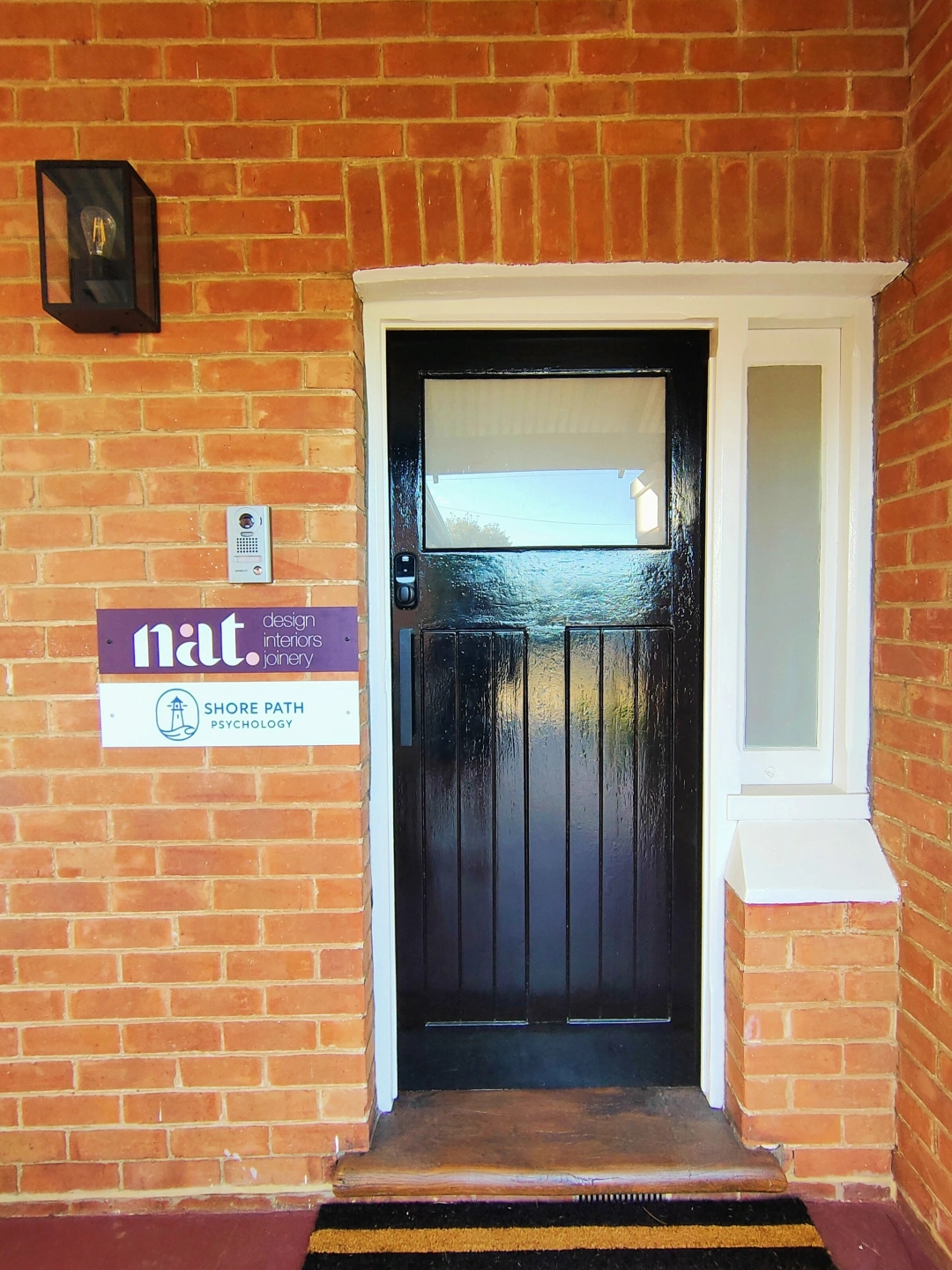
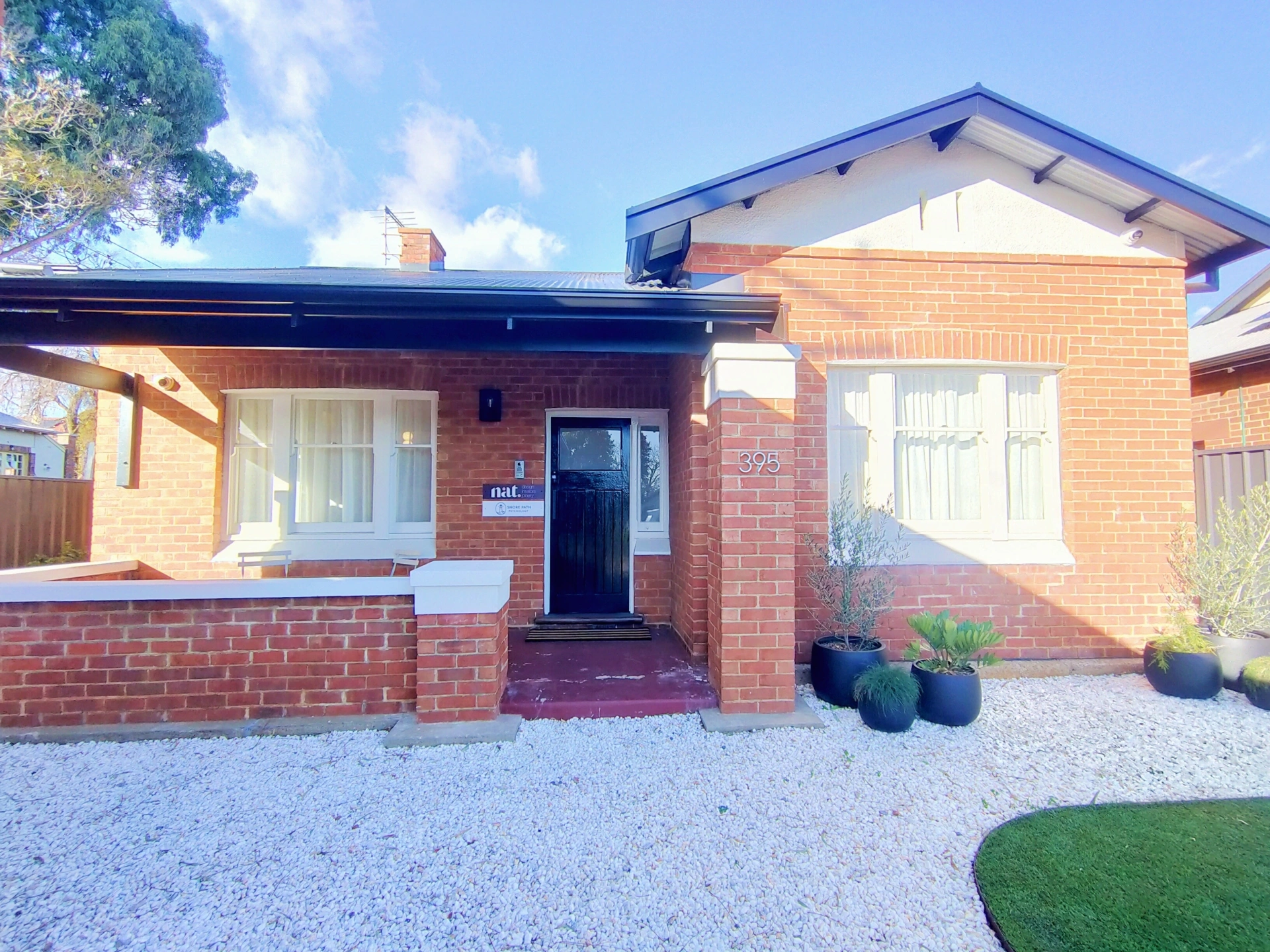
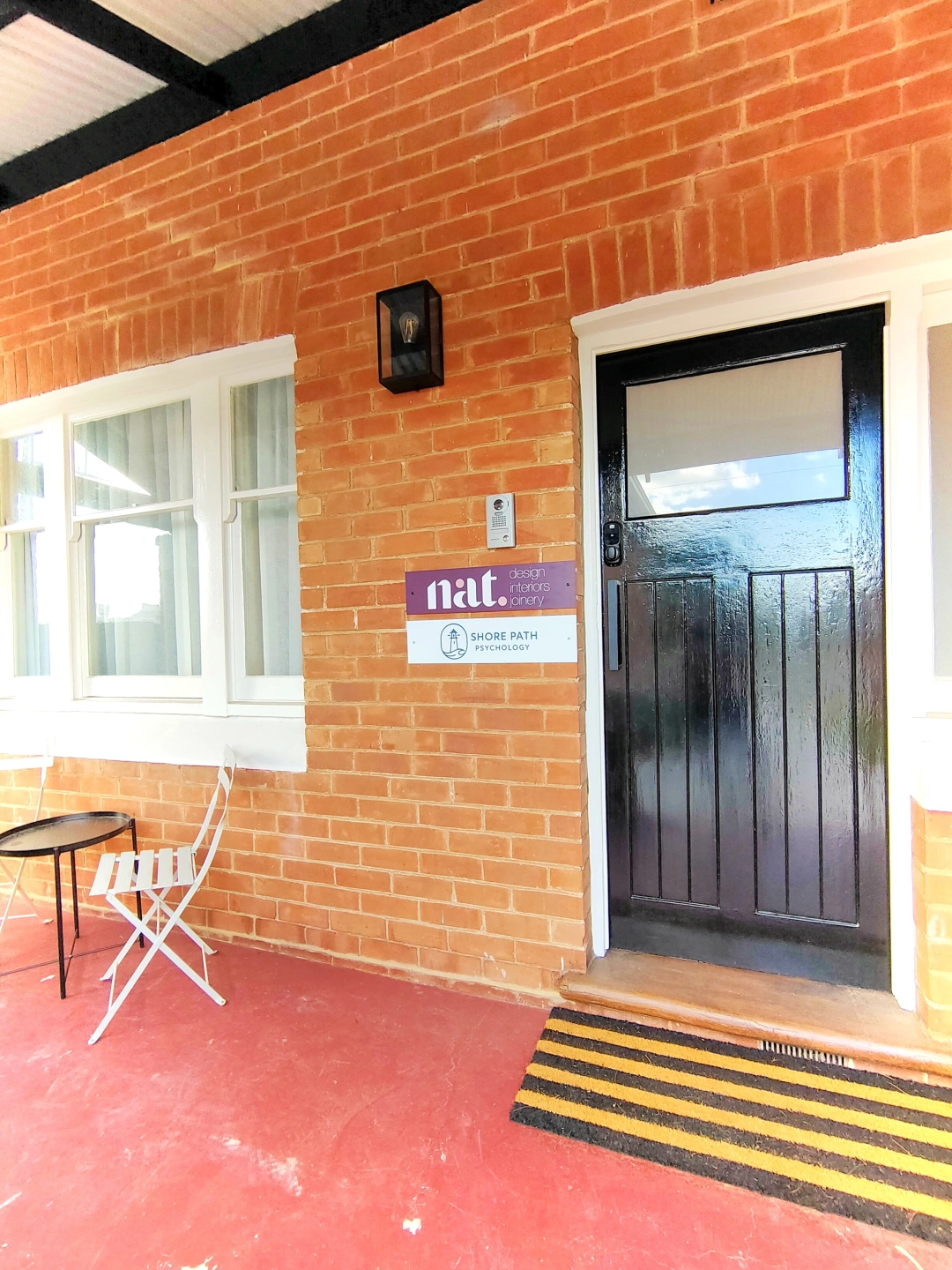
There is plenty of free street parking on Richmond Road right next to the building. If you're using your GPS/maps, just put "Richmond Road Memorial Hall" in it (which is not my building, but I am across the street to it) which will direct you to the perfect street area to park under some shaded trees right next to the building I'm in. Once you park, just walk around to my entrance which is facing Goodwood Rd (I'm in the red brick building with the verandah just behind the patch of grass, you'll see the sign "Shore Path Psychology" next to the front door).
If coming by public transport, the closest bus stop near the front of the building is Stop 11 Goodwood Rd (East/West), or Unley Park Railway Station is nearby.
You are very welcome to access therapy without having a GP referral and Mental Health Treatment Plan (MHTP). However, if you are wanting to claim Medicare rebates for your sessions you will need to have a referral letter and MHTP from your GP.
Starting therapy can feel like a big step, so it’s natural to wonder what to expect and whether it will help.
Psychological therapy (sometimes also called talk therapy or psychotherapy) is a safe, supportive space where you can talk openly about the challenges you're facing. Together, we explore your thoughts, emotions, behaviours, and experiences to help you understand yourself better, make meaningful changes, and feel more in control of your life.
Each person’s therapy journey is unique, but it often involves:
Gaining insight into patterns or problems that might be holding you back
Learning practical tools to manage stress, anxiety, low moods, frustration, shame or other difficult emotions
Building healthier relationships and ways of coping
Working toward goals that matter to you
Using psychological tools to become unstuck from upsetting experiences and emotions that are affecting you today
What’s most important is that therapy is a collaborative process, grounded in trust and respect.
Research shows that the majority of people who engage in therapy find it helpful, and it often leads to lasting improvements in how they feel, function, and relate to others.
If you’re considering therapy, you don’t need to have everything figured out before you begin. The first step is simply reaching out.
It can be great to know what a first session looks like, which can help ease some of the normal nervous feelings you might have about starting therapy.
A first session starts by me welcoming you into the space and checking in to see how you are feeling and helping you feel comfortable.
I would then gently ask you a few questions to get to know you and how your life is currently going for you (learning about your work/studies, the people in your life, your physical health and what you enjoy doing). I would then ask about what you have been experiencing to make sure I can understand what you are going through and to understand what your therapy needs may be.
You can tell me as much as you want or as little as you want in that first session, whatever you feel most comfortable with at that time. Often people really feel relieved in having the space to discuss their experiences and to reflect together to gain a sense of clarity.
Sometimes the first session may also involve some short questionnaires about your experiences/symptoms, so together we can get a better understanding of what you may be experiencing and so we can track improvements over the following sessions.
I can then provide information to you based on the science of psychology to also help you make sense of your experiences.
You can ask me any questions at any point in the session and I will check-in with you if you do have any questions throughout.
Together we will then start devising the beginning of a stepped plan of research-based psychological strategies to work through your feelings, thoughts and actions, so you have a clearer path to go forward to gain relief and confidence.
We would then take the steps over the next sessions to work through that plan, and we can always change any part of that plan if you wish.
The number of sessions you might need would depend on what you are experiencing and how much help you feel you may need.
For some people they may find three to five sessions helpful in meeting their goals and gain the strategies they need to go forward. Other people may want to have several sessions to work through one or a few goals they have for their mental health, by having sessions to process different parts of their experiences.
I will go at the pace that you want to go at in taking the steps towards helping you improve in how you are feeling and your confidence.
In order to make sure you get the most out of your sessions, I strive to ensure that you get to take something with you by the end of each session, whether it might be a new helpful way of understanding your experiences, a plan for steps forward, a psychological tool/strategy you can use, or having taken steps in session in overcoming something you have been distressed about.
Once you are feeling better and have the confidence to go forward, you are always welcome to have a “booster” session when you may need to help you continue to go forward.
The first two to four sessions may be a week or fortnight apart to help make sure that therapy is being effective for you, and then you may want to spread those sessions out to being every three to four weeks, or only come back for when you need a “booster” session. However, some people may benefit from keeping sessions regularly each fortnight or month for an extended period of time if that suits their goals.
Before your first appointment, you’ll be asked to complete a short Client Intake form and Service Agreement form online (usually when booking your first session). Consent forms help explain things like privacy, confidentiality, and how your information is managed. You are more than welcome to ask any questions about these forms if you need any clarification or you have any concerns.
Some people find it helpful to write down any questions or key things they would like to share, before the session to bring in. If you are not exactly sure what you want to get out of therapy yet, that’s completely ok! I will work with you to explore and clarify your goals together.
Psychological therapy tends to be most effective when you are actively involved and take a collaborative approach with your psychologist.
Depending on the therapy approach, you might be invited to do a bit of reflection or practice between sessions. This could include trying out strategies or noting and reflecting on how things are going. Bringing those reflections into sessions can really help link what happens in therapy with your everyday life to help make positive changes to improve how you are feeling.
Lastly, try to schedule your sessions at a time and place where you can really focus by minimising possible distractions from work, family, or devices can help you get the most out of your time (especially if the session is by telehealth).
The information you discuss with me is kept confidential (including whether you have contacted me) and will not be disclosed without your permission; however, there are some reasonable exceptions, such as the following. Psychologists must provide a brief report to your referring doctor if you are having services under a Mental Health Treatment Plan (MHTP). Also, psychologists must disclose some information related to safety if they are concerned about risk (specifically, if you or another person is at risk of harm). Psychologists are also bound by law to report suspected abuse or neglect or children and vulnerable adults.
Your session time is set aside especially for you when you make each booking; however, it is understandable life can be unpredictable and occasionally you may need to reschedule or cancel your appointment.
If you need to cancel or reschedule an appointment, please do so as early as possible, with more than 48 hours notice before your session. This timeframe allows for someone else to be booked in who might be waiting for much needed services (if you cancel under the requested timeframe, it is unlikely that at short notice someone else can be scheduled in).
In the event of a late cancellation or rescheduling (within 48 hours), or a missed appointment, without extenuating circumstances, a cancellation fee of $105 will be applied for privately funded and Medicare funded consultations (and Medicare or private health insurance rebates cannot be claimed for this fee).
For NDIS participants, the cancellation policy and fees are as per the NDIS pricing arrangement guidelines.
Thank you for your understanding.
For crisis situations:
Call triple 000 to access emergency services: ambulance services
Present to any Emergency Department at your local Hospital.
Mental Health Triage (24 hrs, 7 days a week) for Emergency Mental Health support, assessment and consultation 13 14 65
Urgent Mental Health Care Centre 215 Grenfell Street, Adelaide, SA. Open 24 hours, free, walk in, no appointment or referral required.
Suicide Call Back Service (24 hrs, 7 days a week) phone and online counselling to people affected by suicide.
Lifeline 13 11 14 (24/7)
Other counselling support options (click on links below):
Sonder Mental health services in the greater Adelaide area
Lived Experience Telephone Support Service (LETSS)
QLife LGBTI peer support and referral
The University of Adelaide Counselling support service and University Crisis Line
Flinders University Counselling service and After Hours Crisis Support Line
Uni SA Counselling Service and Out of Hours Crisis Line
Counselling support for your young person at your school
Drug and Alcohol Services of SA
1800 RESPECT National Domestic Violence and Sexual Violence Counselling Service
Sexual Health Information, Networking and Education SHINE SA
Information for GPs and Referrers
Mental Health Treatment Plans and referral letters can be emailed through at shorepathpsychology@gmail.com - or sent via HealthLink using the following HealthLink EDI: shorepps
Please call or email if having any issues or if you would prefer an alternative means to provide documents through.
Location
Address
395 Goodwood Rd, Westbourne Park SA 5041, Australia
Operating Hours
Mondays to Fridays
10am to 5pm (last session time is at 4pm)
In-person or Telehealth
Welcome to Shore Path Psychology
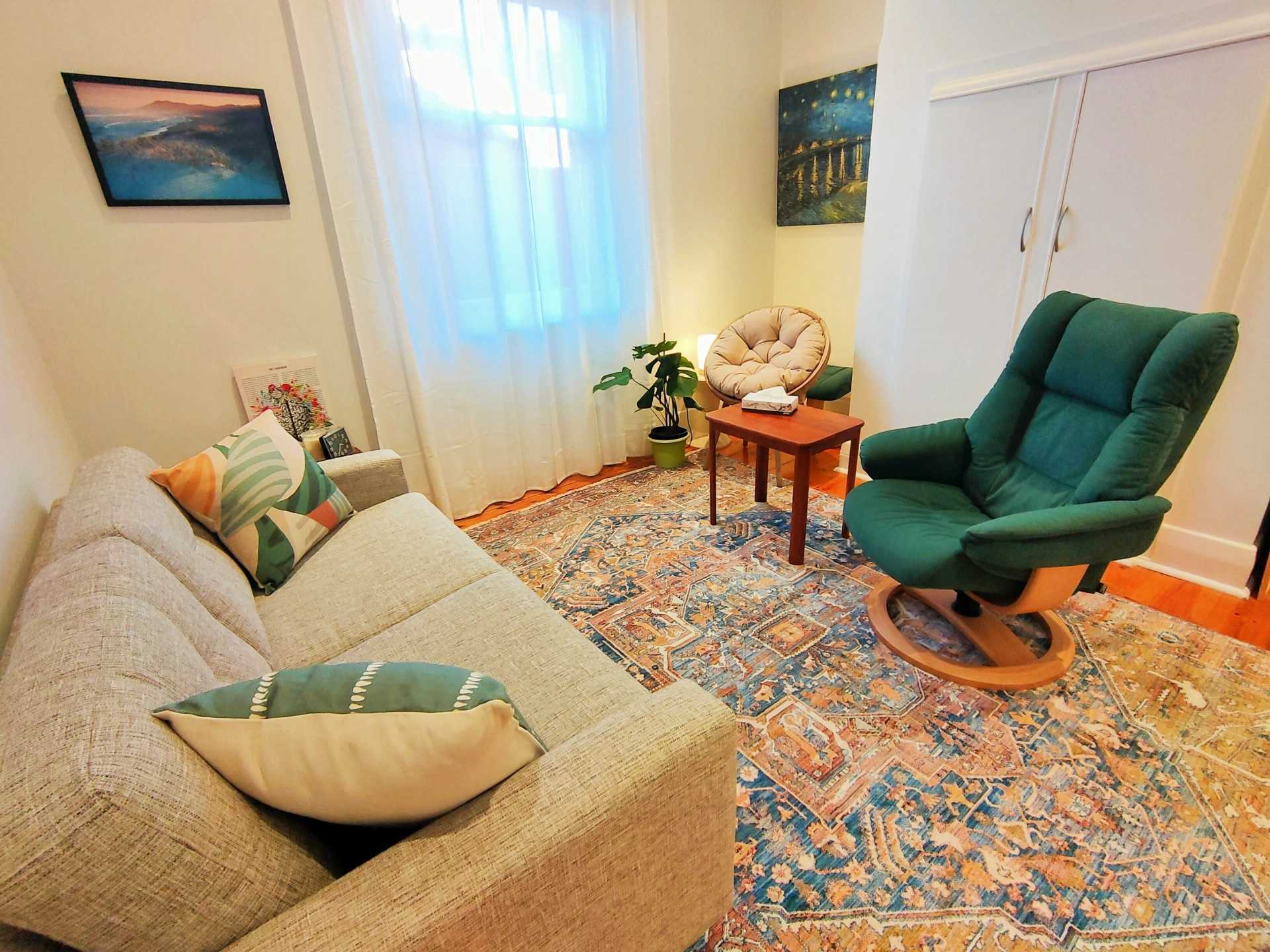
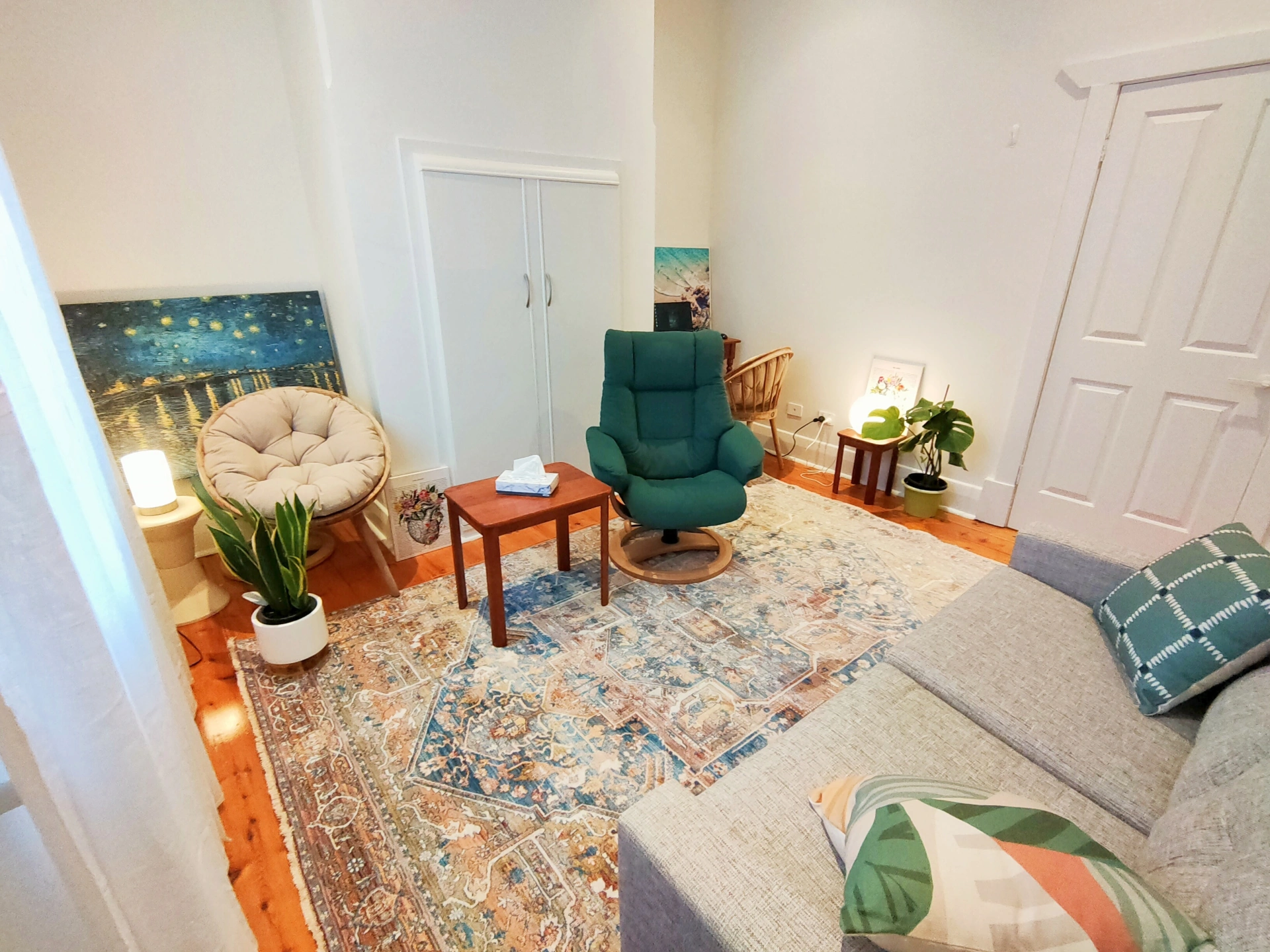
A look at the therapy space
A calm and warm environment, a space you are welcome in


Shore Path Psychology acknowledges the Kaurna people as the Traditional Custodians of the land on which we live and work. We recognise their continuing connection to land, waters, and culture, and we pay our respects to Elders past and present. We extend that respect to all Aboriginal and Torres Strait Islander peoples today.
Shore Path Psychology welcomes people from all cultures, faiths, backgrounds, and experiences, and celebrates all identities, genders, sexes, orientations and abilities.